Water heater making popping noise? What Riverside homeowners should know
That popping sound from your water heater is almost always sediment boiling under the burner. Here's what causes it in Riverside, what a flush costs, and when to replace.
A popping noise from your water heater is almost always sediment boiling at the bottom of the tank, and it is your earliest warning that the unit is working harder than it should. The good news is that a flush fixes it in most Riverside homes before the tank cracks. The bad news is that ignoring it for a year or two usually turns a $150 service into a $1,800 replacement. Below we cover what causes the pop, why Riverside water makes it worse, how to flush the tank yourself, and the point where repair stops making sense.
Why is my water heater making a popping noise in Riverside CA?
Water heater popping noise in Riverside is caused by minerals settling on the tank floor and trapping water underneath, which flashes to steam when the burner fires and pops through the sediment layer. Every gallon of Riverside tap water carries dissolved calcium and magnesium. When the tank heats, those minerals drop out of solution and settle as scale on the bottom. Over 12 to 24 months that layer hardens into a crust. Water trapped beneath it hits 212°F against the hot steel, turns to steam, and escapes upward through cracks in the scale. That is the pop, rumble, or crackle you hear from the garage or utility closet.
It is not a small cosmetic issue. Sediment acts like a blanket between the burner and the water. Your gas valve stays open longer to reach the set temperature, which drives up your gas bill and shortens the tank's life. On electric units, the lower element gets buried in scale and burns out faster. Either way, the noise is a symptom, not the problem.
Why Riverside water is hard on water heaters
Riverside's municipal supply runs hard, and the western neighborhoods fed by older wells and blended sources run harder still. Hardness in the 10 to 16 grains-per-gallon range is common across the city, which is well above the 3 to 7 gpg that most tank manufacturers treat as normal. That mineral load is why we see sediment popping in Riverside tanks at 3 to 5 years old, while the same model in a soft-water city might stay quiet for a decade.
Homes in Rubidoux CA plumber service areas and the older pockets of the east side tend to see it first, partly because of water chemistry and partly because many of those houses still run original 40-gallon tanks from the 2000s. If your neighbor's unit is popping too, it is not a coincidence. It is the water.
Two things slow the buildup down. First, annual flushing. Second, a whole-house softener or water filtration services Riverside California that pulls calcium out before it reaches the tank. Homeowners who do both routinely get 12 to 15 years out of a tank instead of 7 or 8.
Is a popping water heater dangerous in Riverside CA?
A popping water heater is not an immediate explosion risk, but it is a genuine safety concern that gets worse the longer it runs. The pop itself is steam, and steam means the tank is being stressed from the inside. Three risks matter:
- Overheating and pressure: sediment insulates the burner, the tank runs hotter than designed, and the T&P relief valve works overtime. A stuck relief valve on a scaled tank is how you get a burst.
- Gas and carbon monoxide: a gas burner fighting through scale can burn inefficiently. Any yellow flame or soot around the burner door means stop using it and call us.
- Flood damage: a tank weakened by years of thermal stress usually fails at the seam or the bottom head, and it fails all at once. A 50-gallon tank in a garage can put 4 inches of water into the house before you notice.
If you also see rust-colored hot water or water pooling at the base, the tank is already past the point where a flush helps. That is a replacement conversation, not a maintenance one.
How to flush a water heater in Riverside
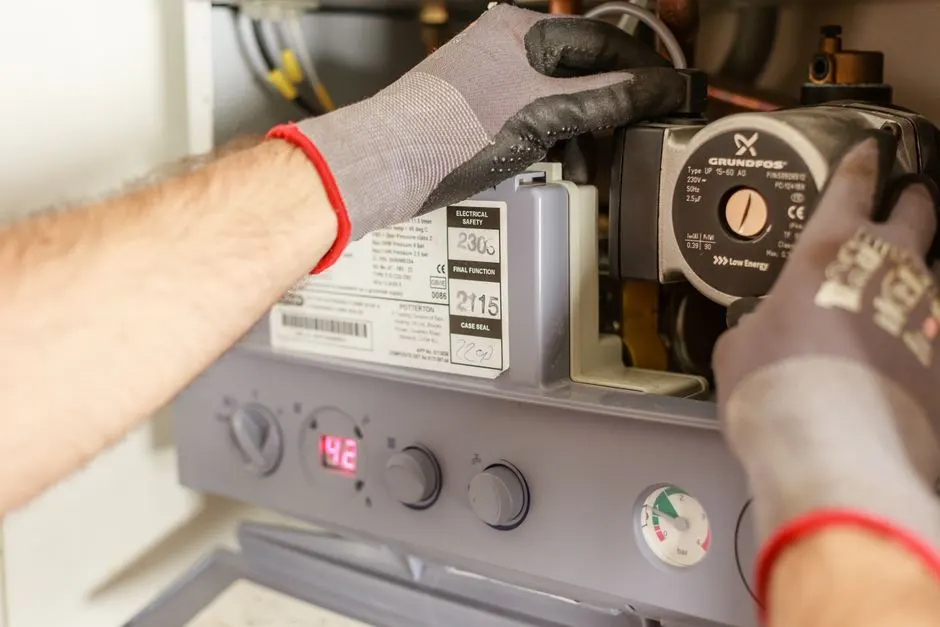
Flushing a tank water heater in Riverside takes about 45 to 90 minutes and removes the loose sediment that causes most popping. Here is the process our technicians use:
- Shut off the gas valve or flip the breaker for an electric unit.
- Close the cold-water inlet valve on top of the tank.
- Connect a garden hose to the drain valve at the bottom and run it to a driveway or drain.
- Open a hot-water faucet somewhere in the house to break the vacuum.
- Open the drain valve and let the tank empty. You will see cloudy, gritty water at first.
- Turn the cold inlet back on briefly to stir and rinse the bottom, then drain again. Repeat until the water runs clear.
- Close the drain, refill the tank fully, then restore power or gas.
One warning: if the drain valve has never been opened, it may be seized or start leaking when you touch it. On tanks older than 8 years, we often replace the valve during the flush. If yours is stuck, stop and let us handle it rather than forcing it.
If the popping continues after a proper flush, the scale has hardened into a layer that flushing cannot break up. At that point the options are a professional descale or a new tank. Our Water Heater Repair Riverside CA team can tell you within one visit which one you are looking at.
What to watch out for
Most of the water heater problems we get called out for in Riverside started with a homeowner doing one of these:
- Flushing only once, then never again. Sediment rebuilds in 12 to 18 months on Riverside water. Annual is the number.
- Draining a tank and forgetting to refill before restoring power. A dry electric element burns out in under a minute. That is a $200 to $400 mistake.
- Ignoring the anode rod. The magnesium or aluminum rod sacrifices itself so the steel tank does not rust. Once it is gone, the tank is next. Check it every 3 years.
- Turning the thermostat up to compensate. Cranking a scaled tank to 140°F to get hot water faster accelerates the scale and the pressure problem.
- Assuming a new tank cannot pop. A tank installed on a line with heavy sediment can start popping within a year if the home has no filtration.
We also see homeowners buy a replacement tank at a big-box store and skip the permit. Riverside requires a permit for water heater replacement, and an unpermitted swap becomes a problem when you sell the house.
When to call a professional
Call a professional when the popping comes with any of these: rusty or metallic hot water, water at the base of the tank, a relief valve that drips, a burner flame that is yellow instead of blue, or a tank that is 10 years or older. Those point to a failed tank or a gas issue, and neither is a DIY job.
Our team handles Plumbing Repair Riverside CA calls like this every week. We drain and inspect the tank, check the anode rod and relief valve, test the burner, and give you a straight answer on whether a flush will buy you years or whether it is time for a new unit. If replacement is the right call, we quote Water Heater Installation Riverside CA with the permit included, and we haul the old tank away the same day. Typical 2026 pricing in this area runs $150 to $250 for a flush and inspection, and $1,400 to $2,600 for a standard 40- to 50-gallon gas replacement installed.
Frequently Asked Questions
Why is my water heater making a popping noise in Riverside?
Sediment, almost every time. Riverside's hard water leaves calcium and magnesium on the tank floor, water gets trapped under that layer, and it flashes to steam when the burner fires. A flush removes it in most tanks under 8 years old.
Is a popping water heater dangerous in Riverside CA?
It is not an immediate explosion risk, but it is a real one over time. Scale overheats the tank, stresses the relief valve, and can lead to a seam failure and flooding. Any rust, leak, or yellow flame means shut it off and call us.
How do I fix a popping water heater in Riverside California?
Flush the tank. Shut off the gas or power, close the cold inlet, drain through a hose until the water runs clear, refill fully, then restore heat. If popping returns within a few months, the scale has hardened and needs a professional descale or a new tank.
Should I replace my water heater if it makes popping noises in Riverside?
Only if the tank is 10 or more years old, the popping returns right after a flush, or you see rust and leaks. A tank under 8 years old with clean water usually just needs an annual flush and a new anode rod.
How often should I flush my water heater in Riverside?
Once a year. Riverside water runs 10 to 16 grains per gallon of hardness, which is high enough that sediment rebuilds in 12 to 18 months. Skipping a year is the single most common reason tanks fail early here.
Get help with Plumbing in Riverside
If your water heater is popping, we can flush it, inspect it, and tell you honestly whether it has years left or is on its way out. Bolt Plumbers in Riverside CA serves the whole city and the surrounding areas with same-day appointments on most calls. Call Plumbing Riverside CA at +1 614-957-8979 and we will get the noise sorted.